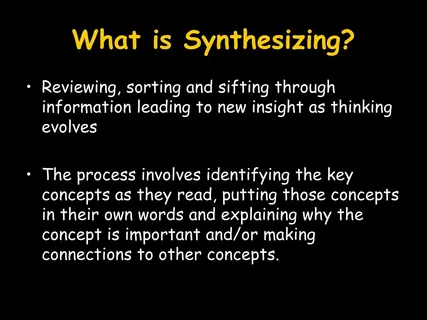
Synthesis is a fundamental process in a variety of disciplines, from chemistry and biology to information science and education. The term “related synthesis” refers to the integration and combination of related ideas, substances, or data to create something new or to gain a deeper understanding of a topic. This article explores the concept of related synthesis, methods for performing synthesis in different fields, and the practical applications that make synthesis an essential tool for progress and innovation.
What is Related Synthesis?
At its core, synthesis means putting together parts or elements to form a whole. When talking about “related synthesis,” the focus is on combining elements that share a connection or relevance to each other. In academic writing, for example, related synthesis involves merging information from multiple sources on connected topics to present a cohesive argument or summary. In scientific research, related synthesis can mean combining related chemical compounds or biological data.
Synthesis vs. Analysis
To understand synthesis fully, it is helpful to distinguish it from analysis. Analysis involves breaking down a complex topic into its constituent parts to understand its structure. Synthesis, on the other hand, is the process of building up, connecting, or integrating these parts into a new whole. In the context of related synthesis, the elements chosen for integration have a meaningful relationship—be it thematic, structural, or functional.
Methods of Related Synthesis
1. Literature Synthesis in Research
One of the most common uses of related synthesis is in academic literature reviews. Here, researchers identify studies that share a common theme, methodology, or subject. Through careful reading and note-taking, they extract key points and then synthesize these findings to provide an overview of what is known and highlight gaps or controversies in the literature. This process involves critical thinking, as the researcher must determine which sources are genuinely related and how best to integrate their findings.
Steps for Synthesis in Literature Reviews:
- Select relevant studies based on a shared topic or method.
- Extract and organize key findings or arguments.
- Identify points of agreement, disagreement, and gaps.
- Combine the information to create a new narrative or conceptual framework.
2. Chemical Synthesis
In chemistry, synthesis refers to the process of creating a compound by combining two or more substances, often through chemical reactions. Related synthesis in this context means forming compounds from related or similar chemical building blocks. This is a cornerstone of fields like pharmaceuticals, where chemists synthesize new drugs by manipulating molecular structures that share core similarities.
Example: Synthesis of Aspirin
Chemists synthesize aspirin by combining salicylic acid (a compound found in plants) with acetic anhydride. Both reactants are related in the sense that they contain functional groups conducive to the formation of the desired product.
3. Data Synthesis in Information Science
With the explosion of data in the digital age, synthesizing related datasets is increasingly important. Data synthesis involves integrating datasets from similar sources or with shared variables to enhance analysis, increase statistical power, or create new insights. For instance, health researchers may combine related patient datasets to study trends across larger populations.
Steps for Data Synthesis:
- Identify related datasets with compatible variables.
- Standardize data formats and resolve discrepancies.
- Merge and analyze the combined data.
4. Synthesis in Education
Educators use synthesis to help students develop higher-order thinking skills. When students synthesize information from related lessons or experiences, they connect concepts across subjects or contexts, deepening their understanding and fostering creativity.
Example: Project-Based Learning
A science teacher might ask students to synthesize knowledge from biology, chemistry, and environmental science to solve a real-world problem, such as designing a water filtration system.
Applications of Related Synthesis
Problem Solving and Innovation
Related synthesis is at the heart of innovation. By bringing together related ideas, materials, or data, individuals and organizations can develop novel solutions to complex problems. For example, in technology, engineers synthesize components from related fields—such as electronics and software development—to create new devices or apps.
Interdisciplinary Research
Many of today’s most pressing challenges require interdisciplinary approaches. Related synthesis enables researchers to combine theories, data, or methods from related disciplines, leading to breakthroughs that would be impossible within a single field.
Policy and Decision Making
Policymakers rely on synthesis to make informed decisions. By synthesizing related research studies, economic data, and expert opinions, they can develop comprehensive policies that take into account multiple perspectives and factors.
Communication and Knowledge Sharing
Synthesis is crucial for communicating complex information in an accessible way. Writers, journalists, and educators synthesize related information from multiple sources to create summaries, reports, or educational materials that help audiences understand key issues.
Challenges in Related Synthesis
While the benefits of synthesis are clear, the process presents several challenges:
- Identifying True Relevance: It can be difficult to determine which elements are genuinely related and worth synthesizing.
- Balancing Breadth and Depth: Synthesizing too broadly can lead to superficial results, while focusing too narrowly may miss important connections.
- Avoiding Bias: Personal or disciplinary biases can influence which sources or elements are chosen for synthesis.
- Ensuring Accuracy: Especially in data synthesis, errors in merging or interpreting data can lead to faulty conclusions.
Best Practices for Effective Synthesis
To perform related synthesis effectively, consider these strategies:
- Set Clear Objectives: Know what you want to achieve—whether it’s a comprehensive review, a new product, or an innovative solution.
- Use Reliable Sources: Especially in research and policy, ensure the information or materials synthesized are credible and high quality.
- Be Systematic: Follow a structured process for collecting, evaluating, and integrating information or materials.
- Seek Multiple Perspectives: Include diverse sources or elements to enrich the synthesis and avoid narrow thinking.
- Reflect and Revise: Review the synthesis critically to identify gaps or weaknesses and revise as needed.
Conclusion
Related synthesis is a vital process across many domains, enabling the creation of new knowledge, products, and solutions by integrating connected elements. Whether merging research findings, synthesizing chemicals, combining datasets, or bringing together ideas in the classroom, synthesis is key to progress and innovation. By understanding and applying effective synthesis methods, individuals and organizations can harness the power of related synthesis to address challenges, drive discovery, and communicate more effectively.
Leave a Reply