
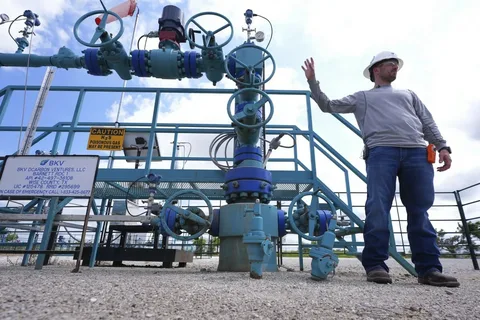
As countries around the world ramp up efforts to combat climate change, carbon capture, utilization, and storage (CCUS) has emerged as a critical tool in the global decarbonization strategy. Carbon capture technology aims to trap carbon dioxide (CO₂) emissions produced from industrial processes or directly from the air and either reuse it in various industries or store it underground. The past year has seen a surge of new projects, policy initiatives, and technological breakthroughs, making “carbon capture news today” a rapidly evolving and headline-grabbing topic.
This article explores the latest developments in carbon capture, profiles major projects, examines global policy trends, and analyzes the role of CCUS in meeting net-zero climate targets.
The Urgency of Carbon Capture
The Intergovernmental Panel on Climate Change (IPCC) and the International Energy Agency (IEA) have repeatedly emphasized that achieving net-zero emissions by mid-century will be almost impossible without large-scale deployment of carbon capture. Heavy industries like cement, steel, and chemicals are considered “hard-to-abate” sectors, where electrification or direct renewable substitution is often impractical. CCUS offers a viable pathway to reduce emissions from these sectors while also enabling “negative emissions” through technologies like direct air capture (DAC) and bioenergy with carbon capture and storage (BECCS).
Recent Headlines and Major Developments
1. Record Investments and New Projects
2025 and 2026 have seen record investments in carbon capture technology. According to the Global CCS Institute, over $20 billion in new funding was announced in the past twelve months, with dozens of new projects breaking ground across North America, Europe, Asia, and the Middle East.
Notable Projects in the News
- United States: The Midwest Carbon Express, one of the world’s largest carbon pipelines, began construction in early 2026, aiming to transport CO₂ from ethanol plants to secure geological storage in North Dakota.
- Europe: The Northern Lights project, a collaboration between Equinor, Shell, and TotalEnergies, completed its first phase, with the capacity to store 1.5 million tons of CO₂ annually under the North Sea. Several new European hubs are under development, connecting emitters in Germany, the Netherlands, and the UK.
- China: Sinopec announced a new CCUS project at its Shandong refinery, targeting 1 million tons of annual CO₂ capture, making it one of Asia’s largest initiatives.
2. Direct Air Capture (DAC) Breakthroughs
Direct air capture, which removes CO₂ directly from the atmosphere, is gaining momentum. In March 2026, Climeworks inaugurated the world’s largest DAC plant in Iceland, capable of removing 50,000 tons of CO₂ per year. The project uses renewable geothermal energy and stores the captured CO₂ in basaltic rock formations, turning it into stone within two years.
3. Policy Shifts and Government Support
Governments are stepping up support for carbon capture through generous subsidies, market incentives, and regulatory frameworks.
- United States: The Inflation Reduction Act’s expanded 45Q tax credit—now offering up to $85 per ton of CO₂ stored—has catalyzed a wave of new projects and partnerships.
- European Union: The EU Innovation Fund announced over €1 billion in new grants for CCUS and industrial decarbonization. The bloc’s Carbon Border Adjustment Mechanism (CBAM) also indirectly incentivizes the adoption of CCUS technologies.
- Asia-Pacific: Japan and Australia are investing in bilateral projects, including CO₂ shipping and offshore storage, to create regional carbon hubs.
4. Utilization: Turning CO₂ Into Value
A growing portion of the carbon capture news today centers on utilization—turning captured CO₂ into valuable products. CarbonCure Technologies and other startups are injecting CO₂ into concrete, strengthening the material while permanently sequestering emissions. Other ventures are producing e-fuels, plastics, and chemicals from captured carbon, creating new revenue streams and circular economy opportunities.
Challenges in Scaling Carbon Capture
Despite rapid progress, significant challenges remain before carbon capture can fulfill its climate promise.
1. High Costs
The cost of capturing, transporting, and storing CO₂ remains high, though prices are falling with scale and innovation. DAC, in particular, can cost over $500 per ton of CO₂ today, although companies like Climeworks hope to cut costs to below $200 per ton by the end of the decade.
2. Infrastructure and Permitting
Building pipelines and storage sites requires extensive permitting and community engagement. Public opposition, land rights issues, and regulatory hurdles can delay projects.
3. Monitoring and Verification
Ensuring that stored CO₂ remains safely underground for centuries is a technical and regulatory challenge. Advances in seismic monitoring, satellite detection, and blockchain-based tracking are helping increase transparency and public trust.
4. Policy Uncertainty
Long-term investment in CCUS depends on consistent policy signals. Changes in government priorities or carbon pricing can impact project viability.
The Role of Carbon Capture in Net-Zero Pathways
As the world races to limit global warming to 1.5°C, CCUS is increasingly seen as an indispensable part of the climate solution toolkit. Major oil and gas companies are rebranding themselves as “carbon management” firms, investing billions in CCUS to decarbonize existing assets and offer carbon removal as a service to other sectors.
Net-zero strategies from the U.S., EU, China, and Japan all include significant roles for CCUS. In the IEA’s net-zero scenario, global CCUS capacity must increase more than 100-fold by 2050 to meet climate goals.
Community and Environmental Perspectives
Carbon capture has its critics. Environmental groups caution against the risk of greenwashing—using CCUS as an excuse to prolong fossil fuel use. Others fear that large-scale CCUS could divert resources from renewables or have unforeseen impacts on groundwater and ecosystems.
However, proponents argue that CCUS is essential for decarbonizing heavy industry and producing low-carbon hydrogen, and that it can deliver net-negative emissions when paired with bioenergy or DAC.
Looking Ahead: What to Watch in Carbon Capture News
- Technology Innovation: Watch for breakthroughs in sorbent materials, modular capture units, and AI-driven monitoring systems.
- Global Hubs: International cooperation will accelerate the creation of shared storage and transport infrastructure, especially in Europe and Asia-Pacific.
- Market Growth: Carbon removal credits and voluntary carbon markets will drive demand for high-quality, verifiable CCUS projects.
- Policy Evolution: Expect new carbon pricing schemes, cross-border agreements, and international standards for MRV (monitoring, reporting, and verification).
Conclusion
Carbon capture news today reflects a sector in rapid evolution. From record-breaking investments and government support to technical breakthroughs and the rise of carbon utilization, CCUS is moving from pilot projects to industrial scale. As the world seeks urgent action on climate change, carbon capture will remain at the center of policy debates, technological races, and investment strategies.